
2021-12
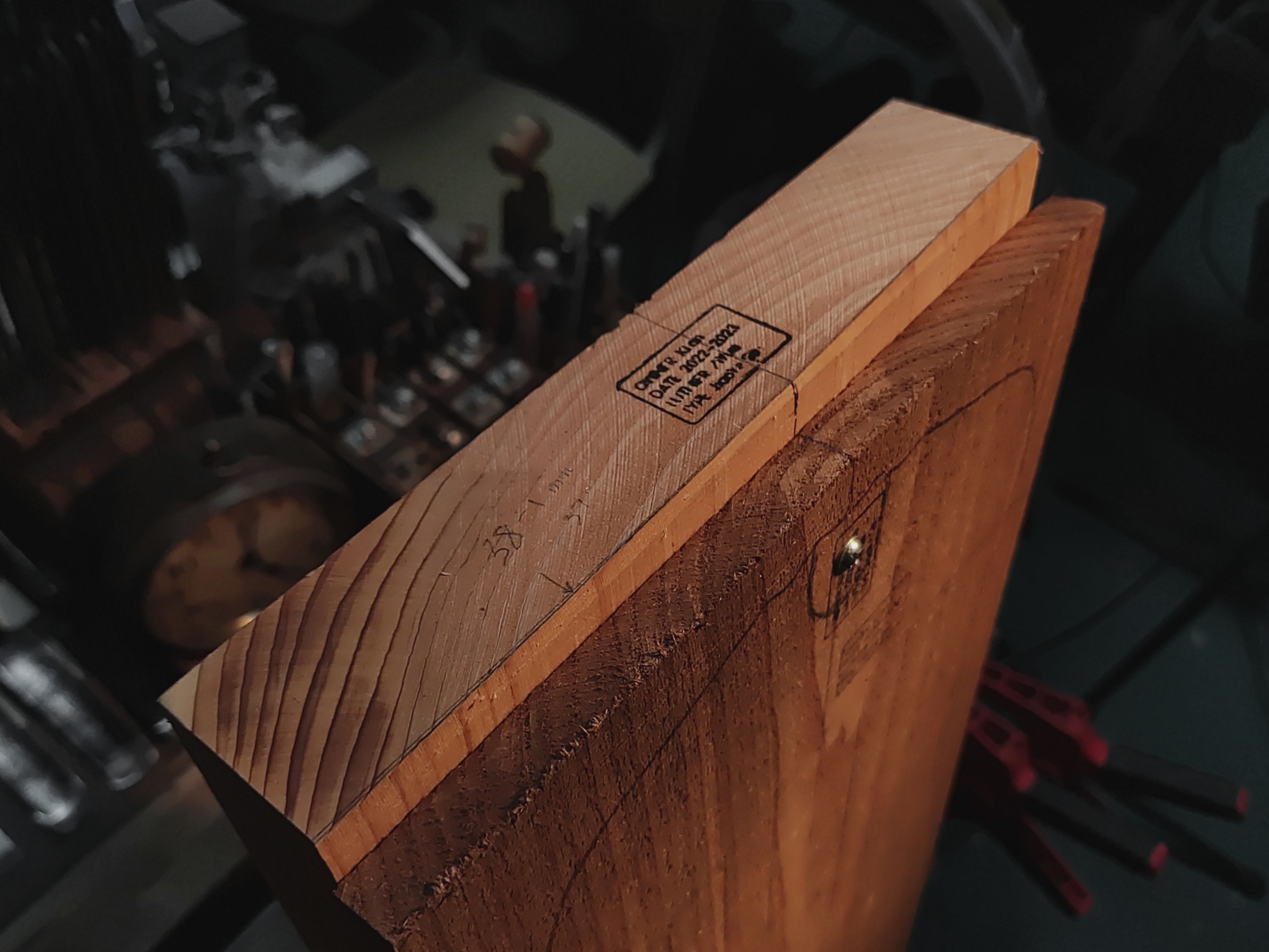
Woods prepare-selection
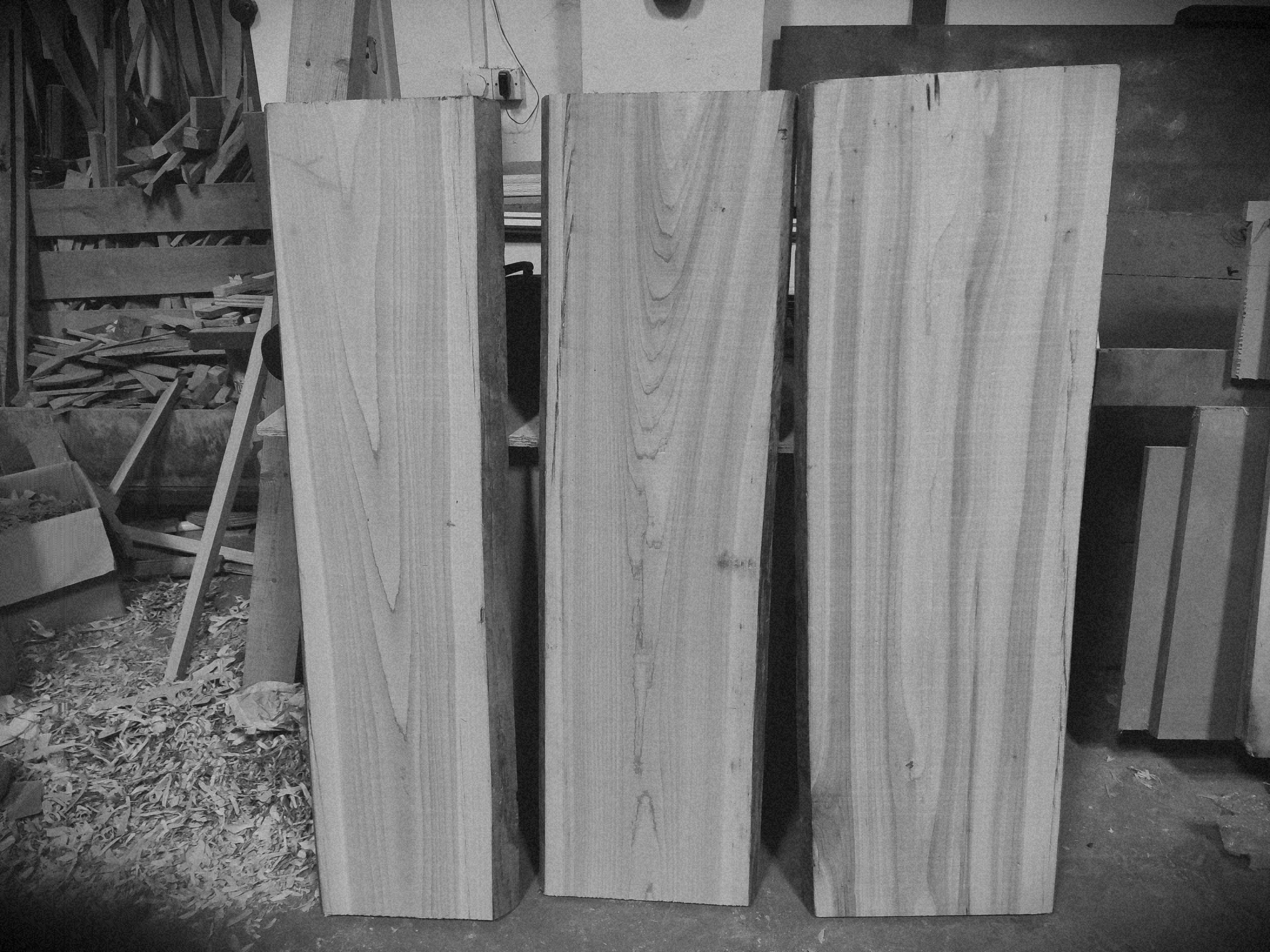
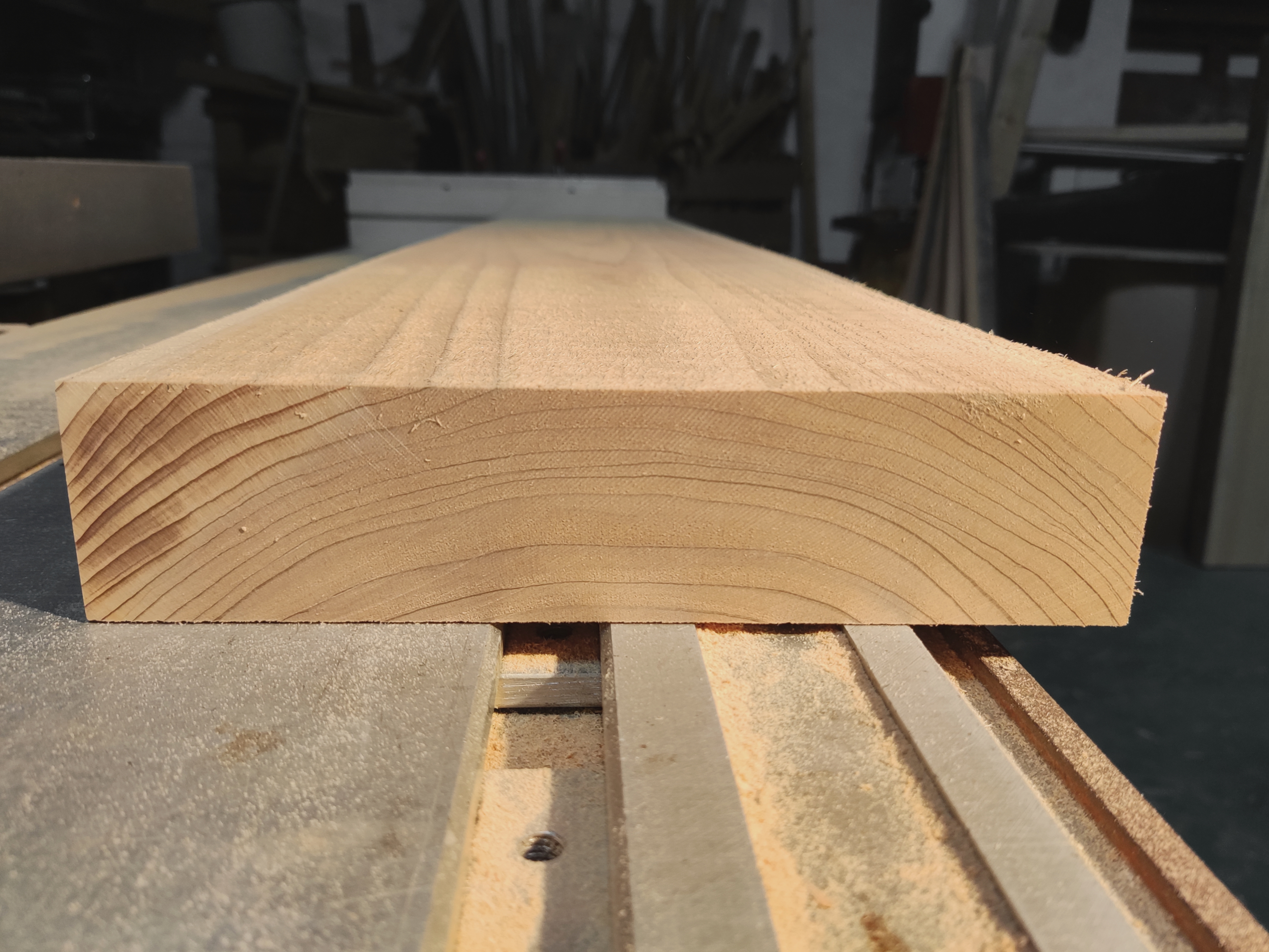
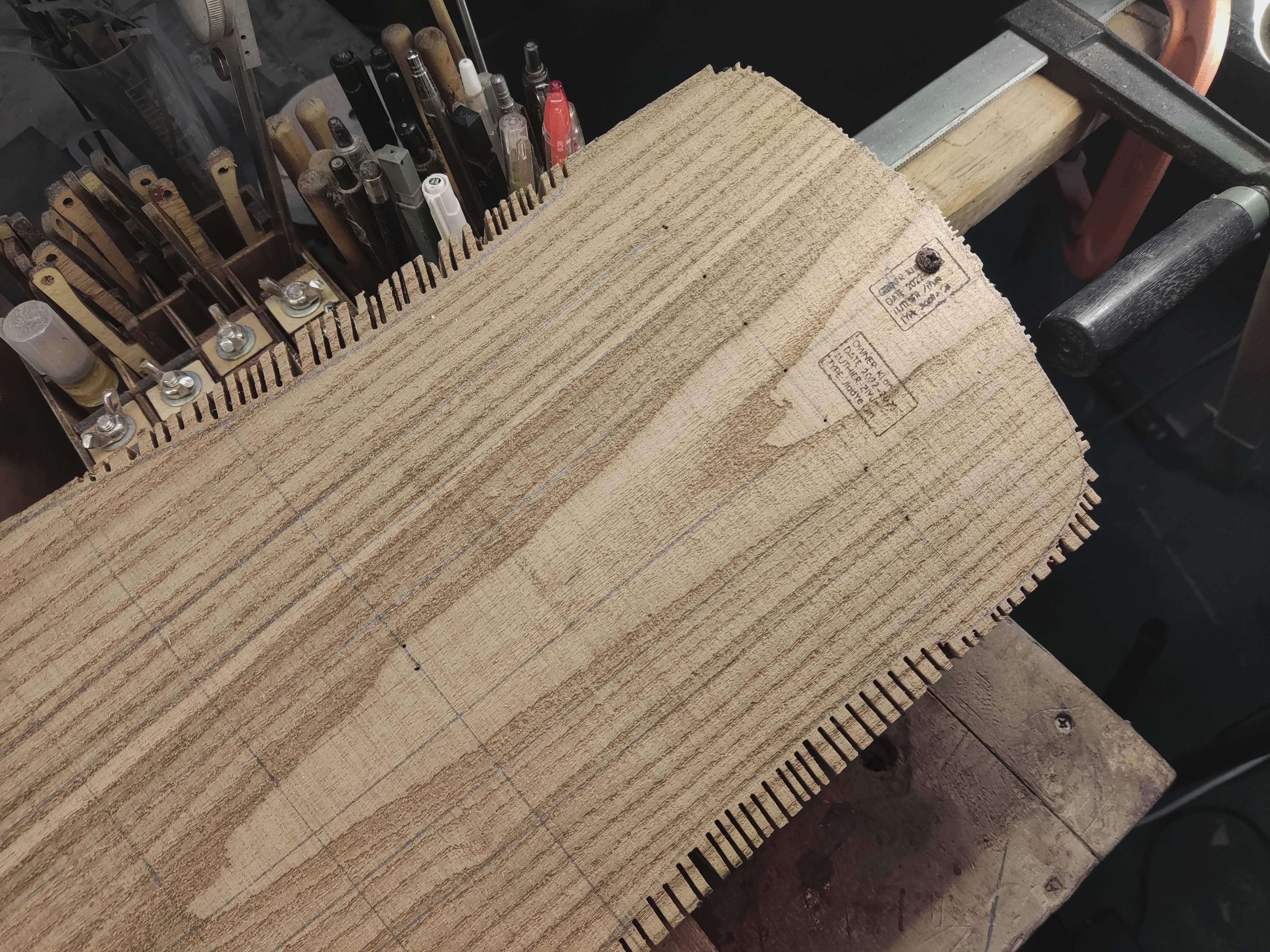
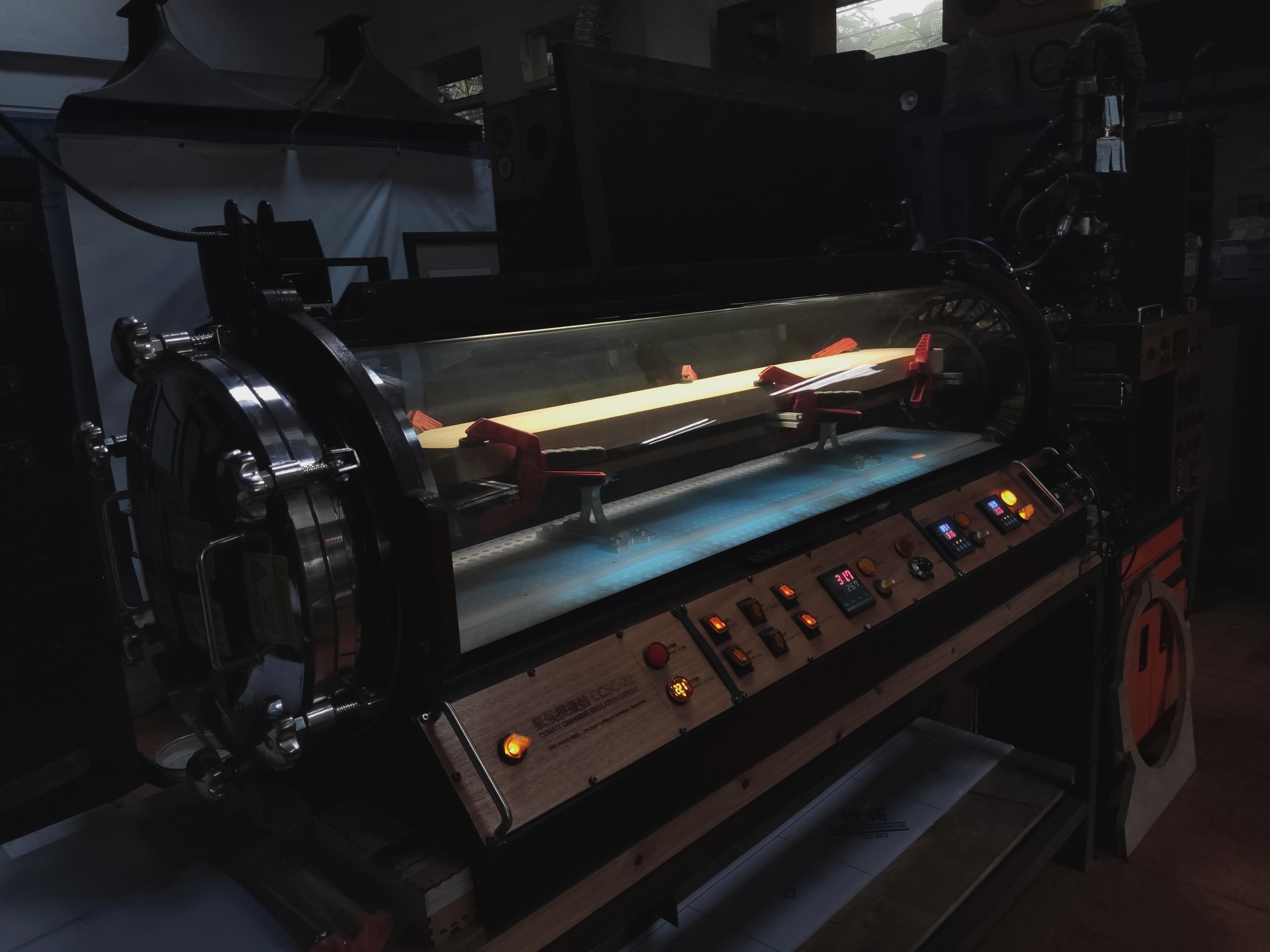
“Wood can be trimmed to straighten with reference by the straighten rope, or curl to wheel shape by thermal treatment, to fit by circular arc criterion…” – Ancient Chinese Prose “Encouragement to Learn”. Although the wood are not perfect, it can usually be cut ingeniously obtain the best range of use, especially emphasized to avoiding insect holes, nodules, cracks, etc. After the wood cutting, try to take its axial symmetry as much as possible, so as to provide the best range of the plane composition and the layout of the internal structure designing for Guqin.
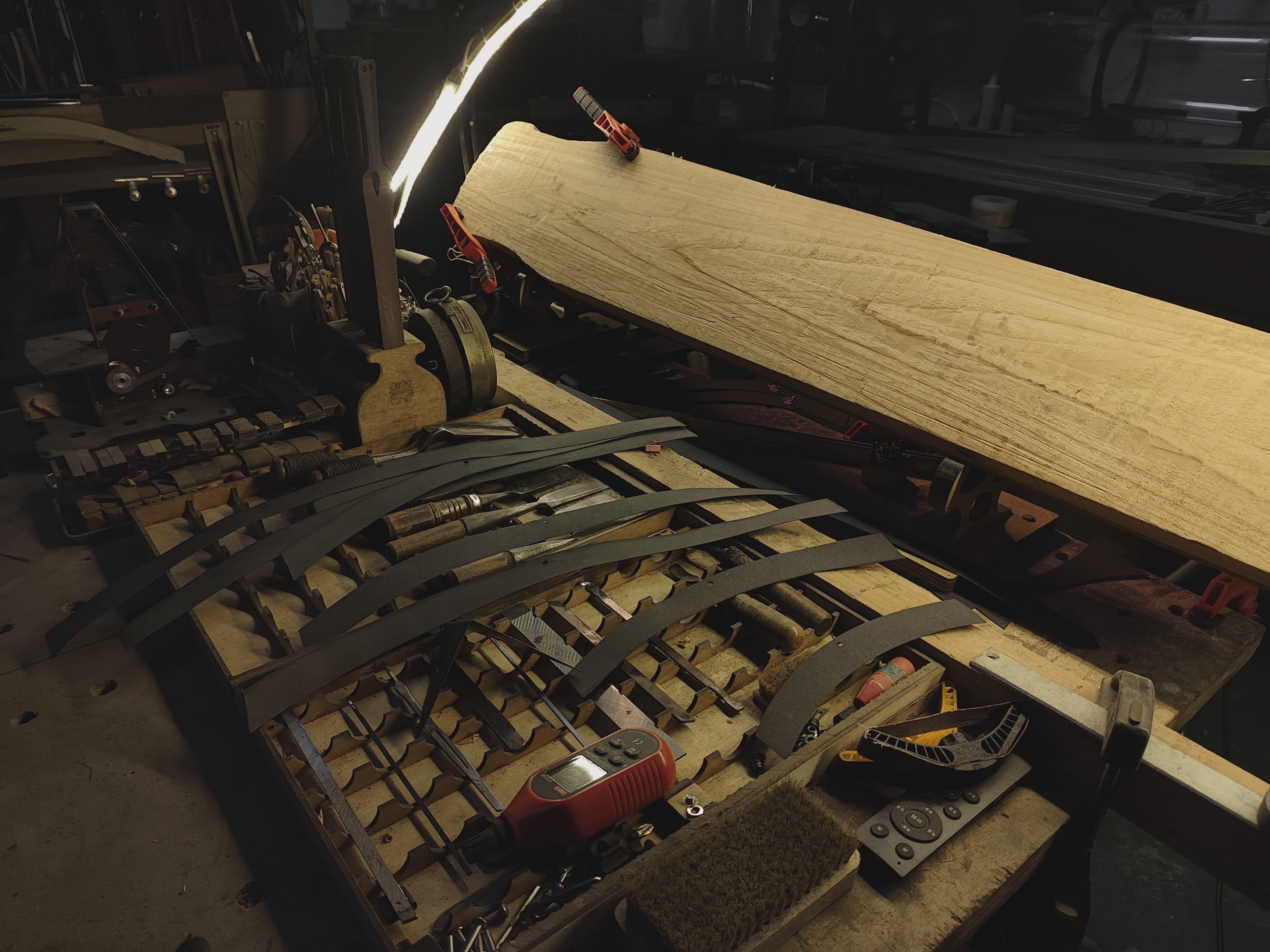
Usually, a small wooden mallet is used for tap-scanning, during the woods matching and cutting, and the tapping-sound is used for rapid diagnose various sections and deep layers, so as to avoid the potential cracks in the cutting materials. And at the same time, Cross-comparison of soundboards that match each other in the multi combination.
The method of the board tapping is mainly based on hearing and empirical judgments, such as the general tone of the light and heavy or ups and downs produced by tapping. Although this kind of experiential perception as difficult to measure as emotion, at least the most suitable board can be quickly screened out under multiple selections, then other boards are stored as backup and long-term aging.
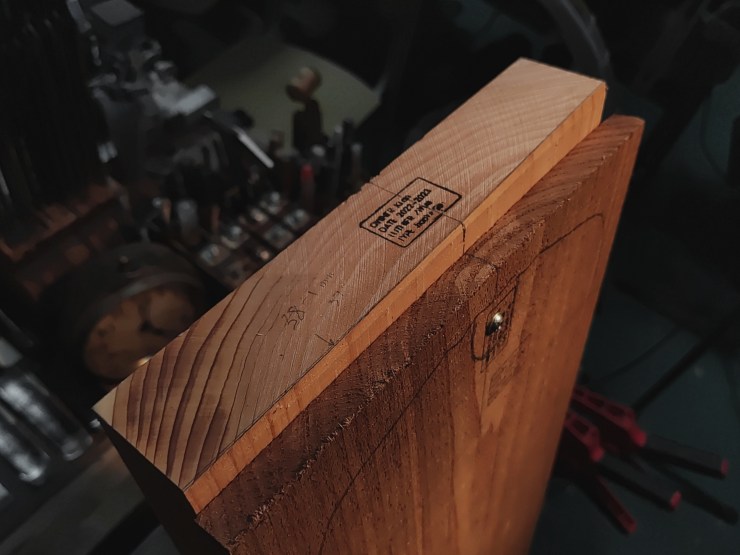
2022-04-04/08-29
Shape designing and cutting
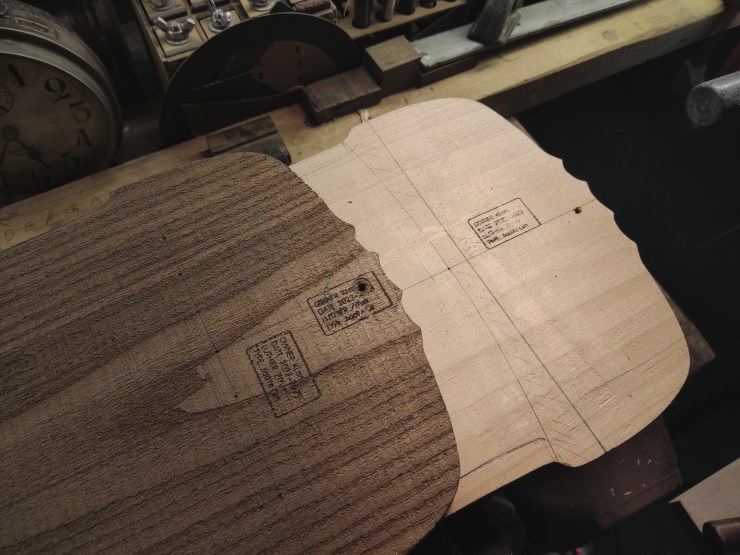
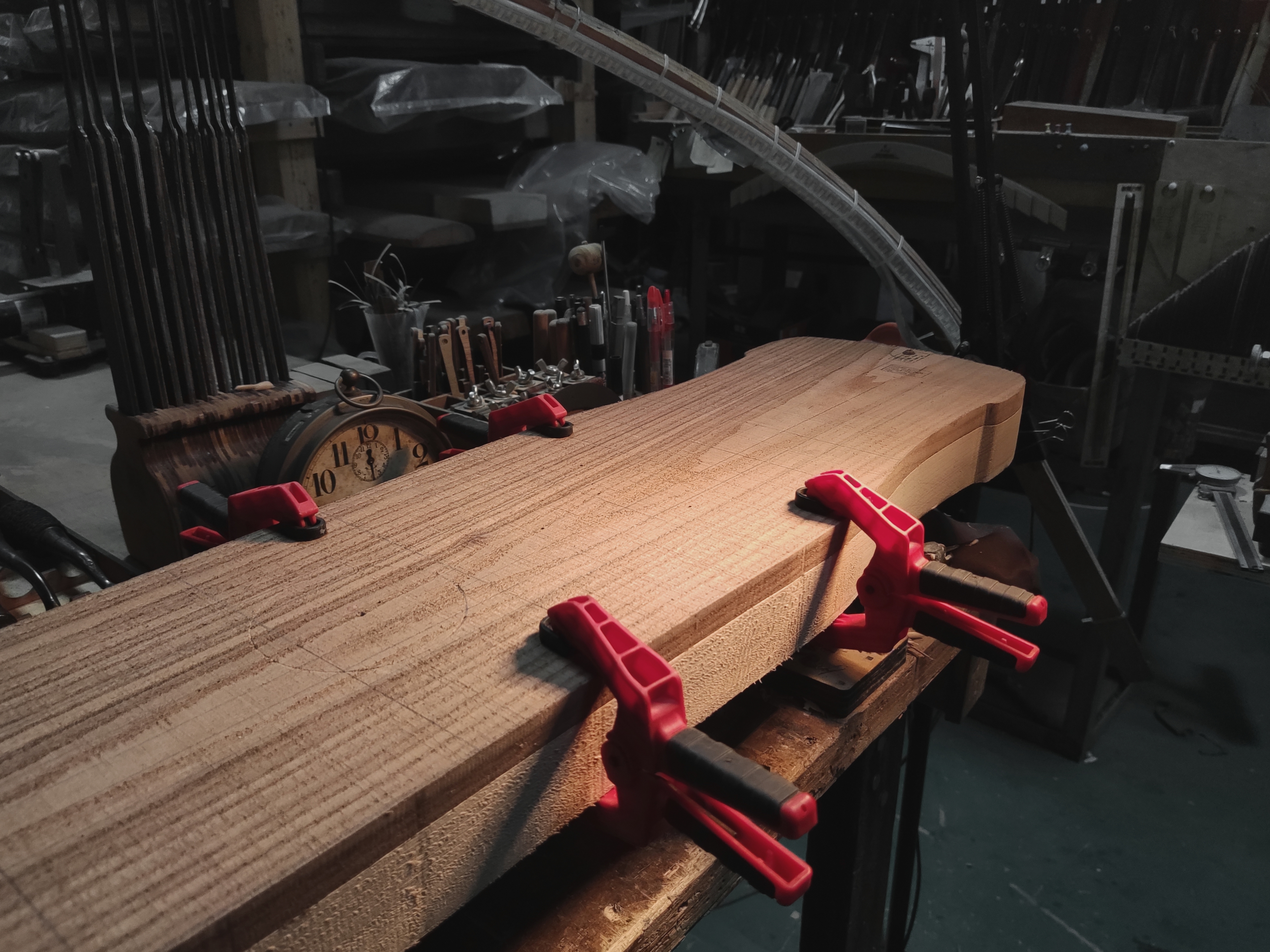
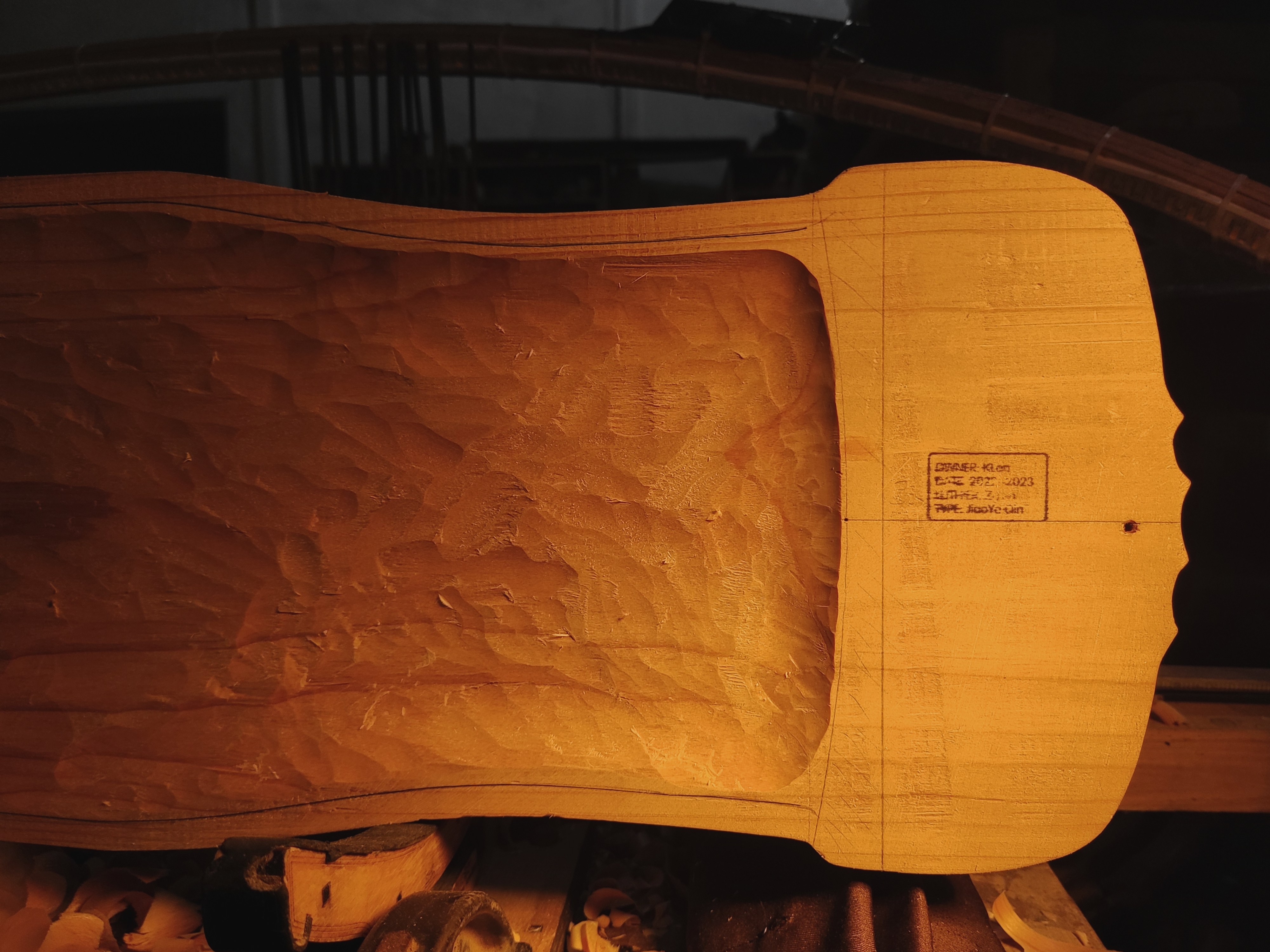
“Structures builds from the ground”; the same true is for the Guqin crafting. Outlining the contour on the board is the key to determining the external shape of Guqin, and it is also the basis for understanding the Guqin. After 2,500 years of development, especially in terms of internal structure layout, it has at least 2,000 years of iteration and optimization.
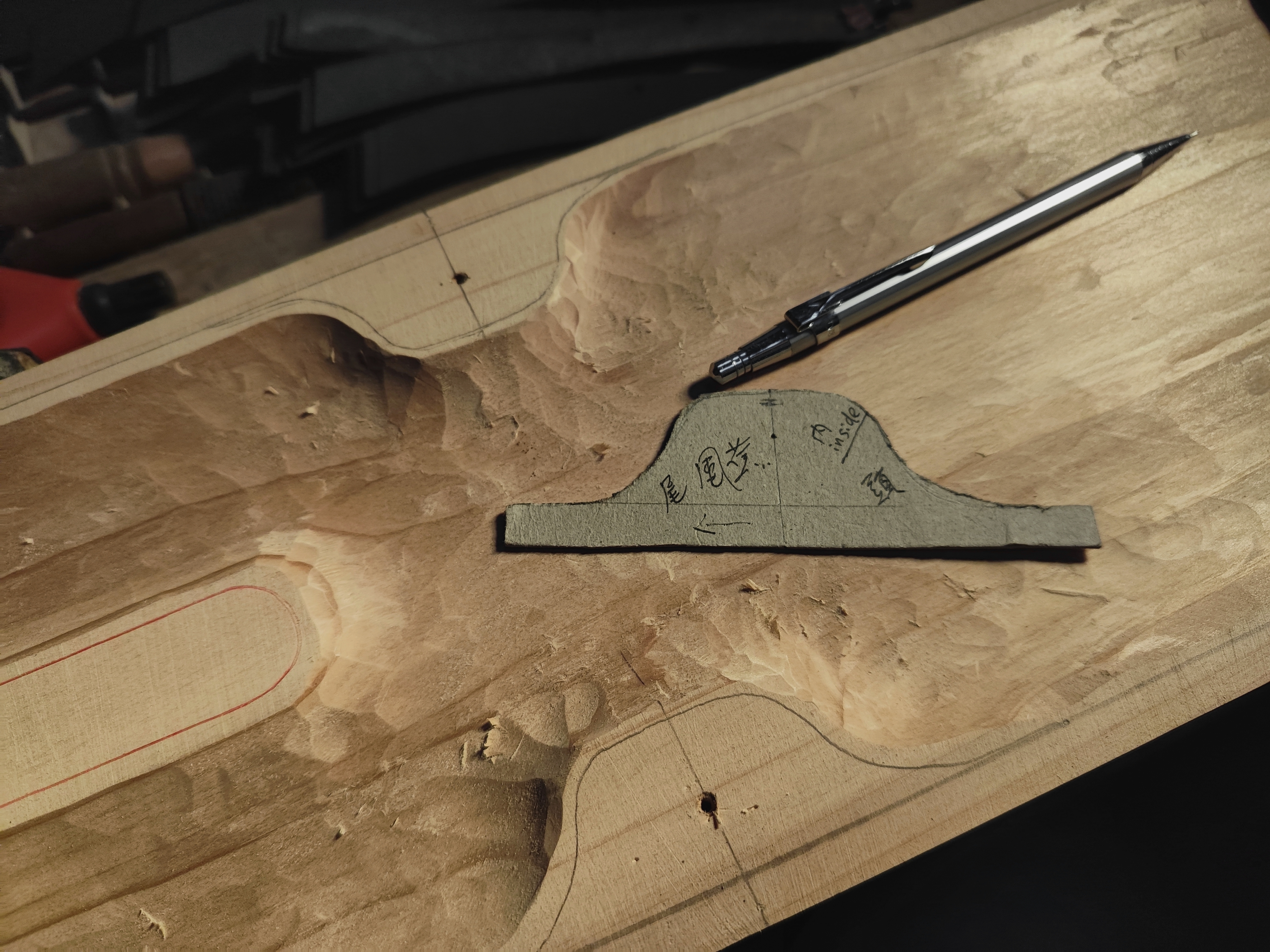
Based on ideas and traditions, every detail of Guqin has been able to form its unique aesthetic rules and regulations in the long-term production and perfection. Although the shapes of each Qin are different, they all retain the core and basic internal sound structure: Longchi Fengzhao, Long-feng Nayin, Long-feng Groove, and Yanzuchi. As for the external shape, follow the thirteen emblems and the internal structure as a reference, and carry out derivative designs with different curves and straight shapes on the head, neck, body, waist, and tail.
As for the Jiaoye qin, although the historical origin of the design concept is still unclear, at least a mature model appeared as early as the early Ming Dynasty in China. In the category of Jiaoye qin, it is worth mentioning that the arc-bottomed Jiaoye qin of “Gugaohua” and the “Yushu Linfeng” Jiaoye qin, its shape once broke the previous aesthetic limitations, but at least it still maintains and abides by the traditional sound structure and the functional shape of normal playing. Its subversive curved shape and flexible two-way tuning once broke through the limit of the Guqin crafting process in the Tang and Song Dynasties and passed down till this day. Therefore, the Jiaoye qin may be a special case or even one of the peaks among many instruments from ancient times to the present.
Notes:
Longchi Fengzhao:Long is the imagery primary part like Chinese dragon and Feng is the imagery secondary part like phoenix,Longchi means pond for the Chinese dragon in which for the relatively deep internal area of Guqin,Fengzhao means swamp for phoenix in which for the relativel shallow internal area of Guqin. Both are a sound cavity structure.
Long-feng Nayin: The primary and secondary parts of the raised structure that focuses the sound vibrations.
Long-feng Groove: The primary and secondary curved and thinner area of the Guqin internal cavity.
Yanzuchi: Yanzu means the parts that look like wildgoose feet,which is the parts for fixing end of string, Yanzuchi is the pier root of string-end fixing part.


 {The Qin Luthier-ZiYun}
You must be logged in to post a comment.